Where Can You See Sloths in La Fortuna, Costa Rica?
La Fortuna is one of the best destinations in Costa Rica for observing sloths in their natural habitat. Surrounded by lush rainforest and located near Arenal Volcano, the region provides an ideal environment for both two-toed and three-toed sloths.
Whether you’re a wildlife enthusiast or visiting Costa Rica for the first time, seeing a sloth up close is often one of the highlights of the trip.
Why Is La Fortuna Famous for Sloths?
The tropical climate, abundant vegetation, and biological corridors around Arenal Volcano create perfect conditions for sloths. Cecropia trees, one of their favorite food sources, are common throughout the area.
La Fortuna’s regenerated forests and protected habitats support healthy populations of sloths and many other species of wildlife.
Which Sloth Species Live in La Fortuna?
I am text block. Click edit button to change this text. Lorem ipsum dolor sit amet, consectetur adipiscing elit. Ut elit tellus, luctus nec ullamcorper mattis, pulvinar dapibus leo.
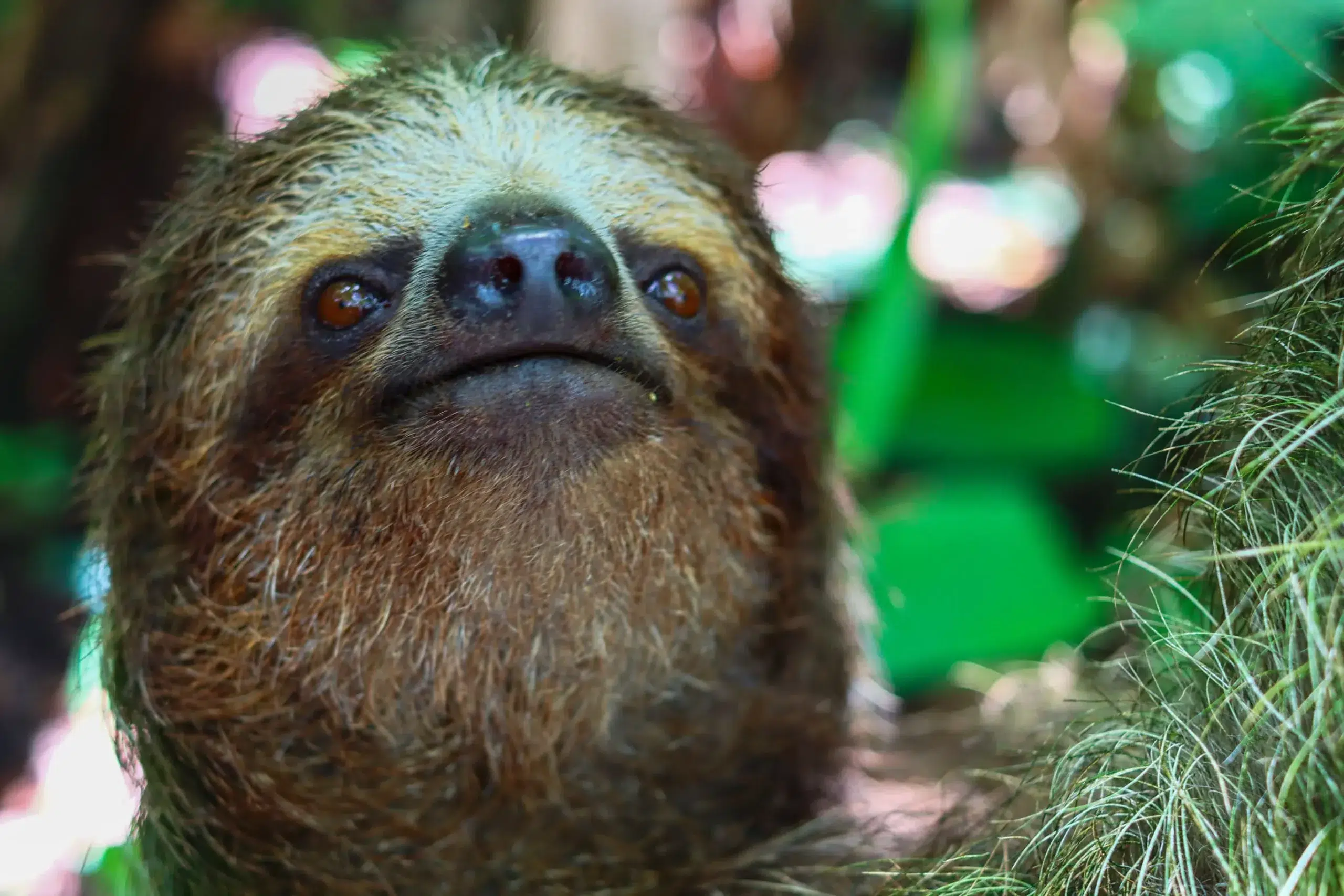
Brown-Throated Three-Toed Sloth
The three-toed sloth is the most commonly seen species. It has a permanent smile and spends most of its life hanging from tree branches.
Hoffmann's Two-Toed Sloth
Two-toed sloths are more active during the evening and are known for their longer fur and larger size.
Where Are the Best Places to See Sloths?
Several areas around La Fortuna provide excellent opportunities to observe sloths.
Private Wildlife Trails
Private rainforest trails offer a peaceful environment and fewer crowds, increasing the chances of wildlife encounters.
Forested Areas Near Arenal Volcano
The rich ecosystem around the volcano provides habitat for sloths, toucans, frogs, monkeys, and countless bird species.
Guided Nature Tours
Experienced local naturalist guides can spot animals that visitors often miss, making guided tours one of the best ways to maximize sightings.
Are Sloth Sightings Guaranteed?
Sloths are wild animals, and sightings can never be completely guaranteed by nature. However, areas with established populations and experienced guides provide very high chances of seeing them.
What Other Animals Can You See?
Besides sloths, visitors often encounter:
- Red-eyed tree frogs
- Poison dart frogs
- Toucans
- Agoutis
- Coatis
- Iguanas
- Butterflies
- Tropical flowers
- Various bird species
Why Join a Guided Sloth Tour?
Certified naturalist guides provide valuable information about:
- Sloth behavior
- Their diet
- Their role in the ecosystem
- Rainforest biodiversity
- Conservation efforts in Costa Rica
High-quality spotting scopes also allow visitors to observe sloths closely without disturbing them.
Frequently Asked Questions
What time of day is best for seeing sloths?
Morning tours generally provide excellent wildlife activity, although sloths can be seen throughout the day.
Can children join a sloth tour?
Yes. Most sloth tours are family-friendly and suitable for all ages.
Are sloths dangerous?
No. Sloths are peaceful animals and rarely interact with humans.
How long does a typical sloth tour last?
Most tours last approximately two hours.
Final Thoughts
La Fortuna offers one of the best opportunities in Costa Rica to observe sloths in the wild. Thanks to its rich biodiversity and beautiful rainforest environment, visitors can enjoy unforgettable encounters with these fascinating animals while experiencing the natural beauty surrounding Arenal Volcano, Please keep in mind that Costa Rica has different regions, each with its own level of biodiversity. Here in La Fortuna, we work with the wildlife that nature provides, and sightings can vary. If you are coming from places such as Corcovado National Park, your expectations may be very high, as La Fortuna cannot be directly compared to Corcovado or other areas with a similar level of natural biodiversity. Every region offers a unique experience and different opportunities to observe wildlife.