Sloth Tour in La Fortuna Near Arenal Volcano
Our Private Trail Is Home to Two- and Three-Toed Sloths
The Sloth: A National Symbol of Costa Rica
When we think of the animal kingdom’s champions of relaxation in La Fortuna de San Carlos, Costa Rica, two creatures immediately come to mind: the two-toed sloth and the three-toed sloth.
These fascinating animals have captured the hearts of locals and visitors alike with their slow movements and gentle nature, becoming one of Costa Rica’s most beloved national symbols.
Their importance is even reflected in our culture the sloth proudly appears on Costa Rica’s ₡10,000 banknote, representing our deep respect for nature, wildlife, and a more mindful way of living.
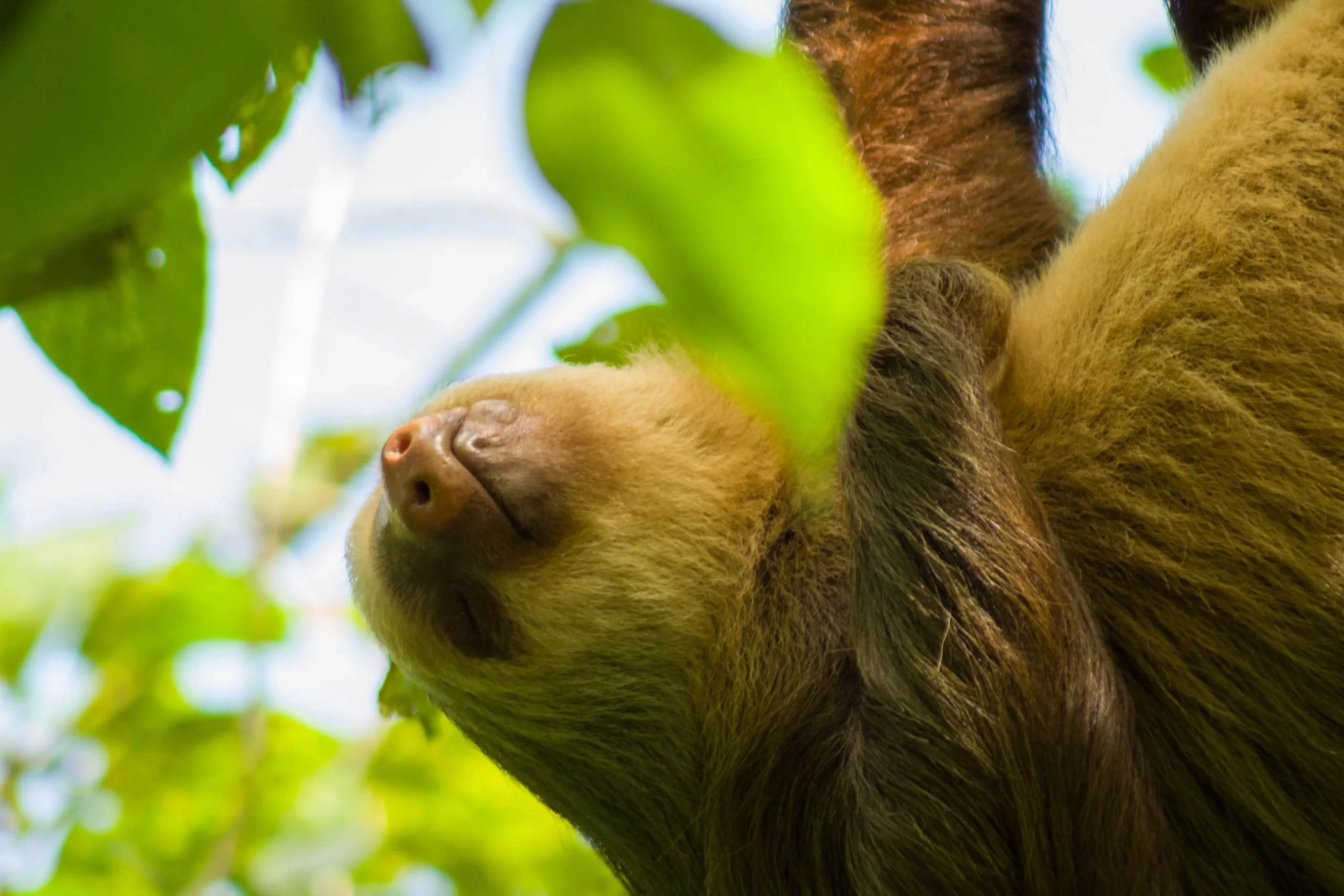
Two-Toed Sloth
- Scientifically known as “Choloepus” in La Fortuna de San Carlos.
- Have two toes on their front limbs.
- Display a slow, deliberate movement pattern, ideal for observing in the region’s serene rainforests.
- Larger and heavier than their three-toed counterparts.
- Covered in brownish-green fur, blending harmoniously with the local foliage.
Key Differences Between Two-Toed and Three-Toed Sloths
Number of Toes
-
Two-toed sloths have two toes on their front limbs and three on their back limbs.
-
Three-toed sloths have three toes on all four limbs.
Activity Patterns
-
Two-toed sloths are generally more active at night and during twilight hours.
-
Three-toed sloths are mostly diurnal, meaning they are more active during the day.
Facial Features
-
Three-toed sloths often have a distinctive “smiling” face with dark markings around their eyes.
-
Two-toed sloths have a rounder face and usually lack those facial markings.
Neck Flexibility
-
Three-toed sloths can rotate their heads up to 270 degrees, thanks to having more neck vertebrae.
-
Two-toed sloths have less neck flexibility, similar to most mammals.
Behavior and Temperament
-
Two-toed sloths tend to be more curious and alert.
-
Three-toed sloths are known for being calmer and more relaxed.
Diet
-
Two-toed sloths have a more varied diet, including leaves, fruits, and flowers.
-
Three-toed sloths mainly feed on leaves, making them more specialized.
Ease of Spotting on a Tour
-
Two-toed sloths are often found higher in the trees and can be harder to spot.
-
Three-toed sloths are sometimes easier to see due to their daytime activity and distinctive facial features.
Sloth Tour La Fortuna | Up-Close Sloth Watching on a Private Trail


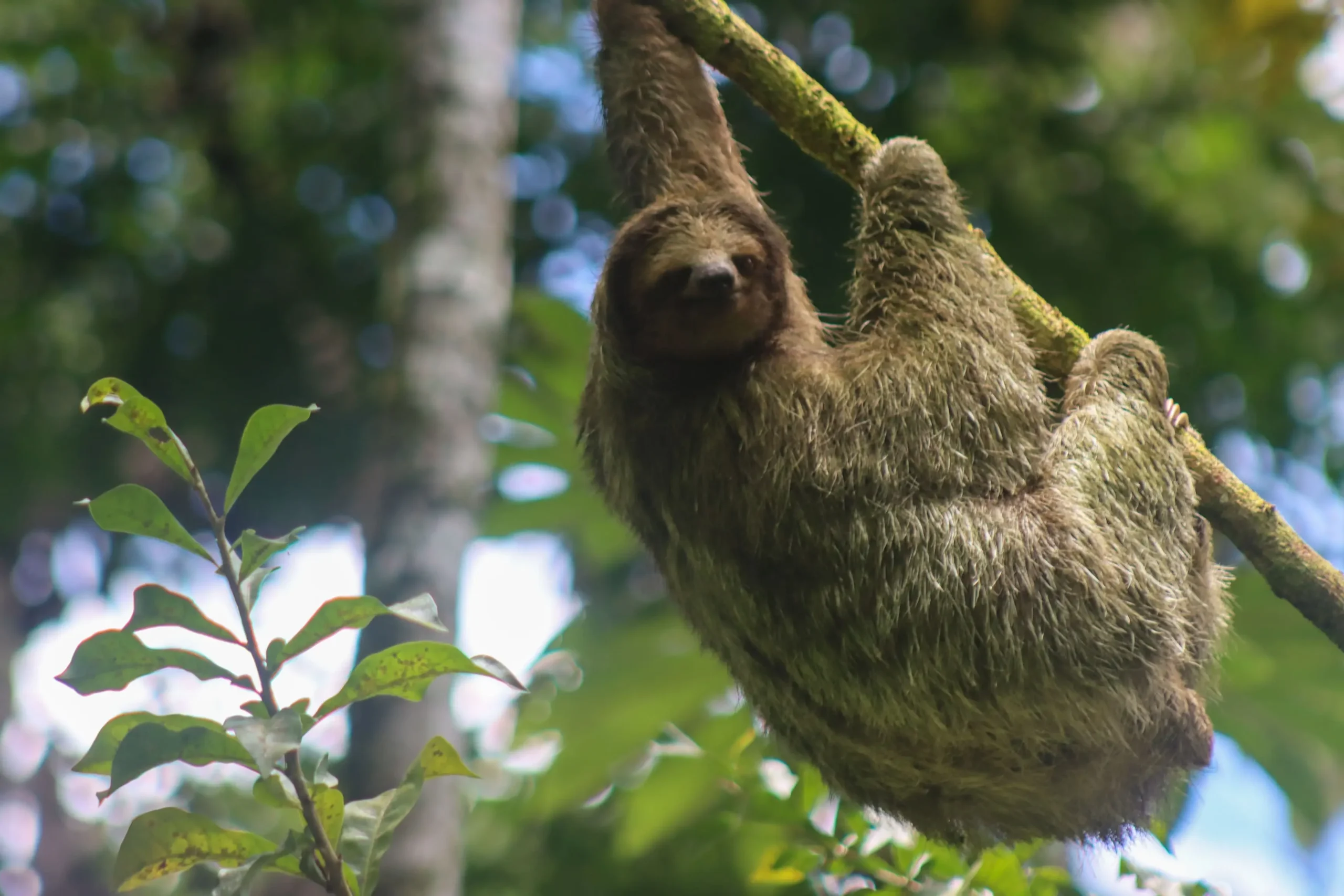
Three-Toed Sloth
Bradypus
- Scientifically known as “Bradypus” in Fortuna de San Carlos.
- Feature three toes on their front limbs, a common sight while exploring the region’s canopy.
- Move even more slowly than the two-toed sloths, perfectly suiting La Fortuna de San Carlos’s relaxed atmosphere.
- Slightly smaller and lighter than the two-toed variety.
- Adorned in grayish fur, allowing them to remain discreet among the trees of La Fortuna de San Carlos.
Habitat and Range: Fortuna de San Carlos's Biodiversity Haven
La Fortuna de San Carlos, located in the northern region of Costa Rica, is a biodiversity hotspot. It’s no surprise that both two-toed and three-toed sloths thrive in the region’s lush rainforests. These habitats provide them with an ample supply of leaves, their primary source of nourishment. The local flora and diverse ecosystems create a perfect haven for these endearing creatures.
Diet: A Leafy Affair in La Fortuna de San Carlos
Sloths are herbivores, and their diet mainly consists of leaves found in La Fortuna de San Carlos’s verdant landscapes. Their slow metabolism and unique digestive system allow them to extract the most nutrition from their low-energy diet, a testament to their resourcefulness in the region.